Our Short List of 3

All 3 Picks at a Glance
| Product | Specs | Action |
|---|---|---|
| MILLERCAT Cat Shield, Stainless Steel V2 — Gen 3 Prius (ASIN: B0BTTXH5B4) | Check price on Amazon | |
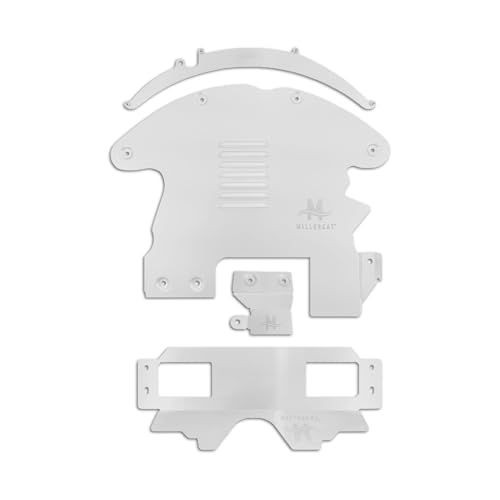 MILLERCAT Cat Shield, Aluminum V2 — Gen 3 Prius (ASIN: B0BTTZZ321) | Check price on Amazon | |
 MILLERCAT Cat Shield, Aluminum V2 — Gen 2 Prius (ASIN: B0CKLZY14S) | Check price on Amazon |
Key takeaways
- Compare the best catalytic converter protection for a Prius: model-specific anti-theft shields in stainless steel and aluminum, matched to your generation.
The Toyota Prius sits at the top of catalytic converter theft statistics for a simple mechanical reason: its converters carry a high loading of precious metals, the car sits at a convenient working height, and the converter is reachable from underneath in moments. A converter shield answers that problem with a physical barrier — a metal plate fitted under the car that covers the converter and turns a quick cut-and-grab into a long, loud, tool-breaking job most thieves will not start.
Every pick below is a model-specific Prius converter shield from MILLERCAT, the brand that effectively created this category and whose shields are sold as an authorized Toyota accessory line. All three are protective plates for the owner’s own vehicle — a lawful anti-theft device, installed once and forgotten until the car needs exhaust service. The differences are generation fitment and material, and generation is the first thing to get right: a shield for one Prius generation does not fit another.
How a Converter Shield Protects a Prius
It removes the quick theft
Converter theft works because it is fast: a saw, two cuts, under two minutes. A shield blocks saw access to the pipe sections on either side of the converter and covers the converter body itself, forcing a thief to defeat a steel or aluminum plate and tamper-resistant fasteners first. That time and noise is the entire point. No shield makes theft impossible, and honest makers say so — the goal is to make your Prius the wrong target in a parking row of easier ones.
Fitment is generation-specific
Prius floor pans and exhaust routing changed across generations, so shields are cut and drilled for specific year ranges. The picks here cover the two most-targeted generations: the 2010–2015 Gen 3 car (and the 2012–2017 Prius V wagon, which shares the platform) and the 2004–2009 Gen 2 Liftback. MILLERCAT also makes shields for newer generations; match the listing to your exact year and body style, and note that these fitments assume the original factory converter is in place — a car already running an aftermarket replacement converter may not match the shield’s coverage.
Stainless steel versus aluminum
Stainless steel is the harder, heavier barrier: the Gen 3 stainless shield below is 16-gauge 304 stainless, a genuinely difficult material to cut quickly with a battery saw. Aluminum shields are lighter, resist corrosion completely, and are easier to handle during installation, at some cost in cut resistance. Both use tamper-proof screws so the fasteners themselves are not a quick defeat with a common socket.
Drill-less installation
The V2-generation MILLERCAT designs mount without drilling, using existing points under the car and security hardware, and they can be removed when the exhaust system needs service. The maker designs them to sit without spacers or dampeners so the plate does not buzz against the floor pan. Installation is underbody work: a lift or proper stands, and a shop fitting is a reasonable choice for anyone not equipped to work safely under a car.
The Picks
MILLERCAT Cat Shield, Stainless Steel V2 — Gen 3 Prius (ASIN: B0BTTXH5B4)
This is the heavy-duty pick for the most-stolen Prius generation: 2010–2015 Gen 3 cars and 2012–2017 Prius V models with the factory converter. The plate is 16-gauge 304 stainless steel secured with stainless tamper-proof screws — the combination that maximizes the time and tool wear involved in any attempt to get past it. At roughly 9.2 pounds it is the heaviest shield here, which is the expected trade for stainless construction.
Installation follows the V2 pattern: drill-less mounting, no spacers or noise dampeners required, and removable for exhaust service. If a Gen 3 Prius is parked on the street in a city where converter theft is common, this is the shield to buy once and stop thinking about.
MILLERCAT Cat Shield, Aluminum V2 — Gen 3 Prius (ASIN: B0BTTZZ321)
The aluminum counterpart covers the same fitment — 2010–2015 Gen 3 Prius and 2012–2017 Prius V with OEM converters — in premium-grade aluminum with the same stainless tamper-proof screws and the same drill-less V2 mounting. At roughly 5.2 pounds it is notably easier to maneuver into place on your back under the car, and aluminum shrugs off road salt and winter slush without any surface corrosion at all.
The honest trade is cut resistance: aluminum yields to a saw faster than 16-gauge stainless. For most owners the deterrent equation — plate, security fasteners, time, noise — is already satisfied by the aluminum version, and the weight saving is real. Choose stainless for maximum barrier, aluminum for easier installation and zero corrosion concerns. Note that this standard package does not include the maker’s optional Deadbolt add-on; check the listing if you want that upgrade included.
MILLERCAT Cat Shield, Aluminum V2 — Gen 2 Prius (ASIN: B0CKLZY14S)
Second-generation cars, the 2004–2009 Prius Liftback, remain theft targets because their converters are especially rich in precious metals, and they need their own shield: Gen 3 plates do not fit. This Gen 2 version is built from 0.08-inch premium aluminum with stainless tamper-proof screws, in the same drill-less, removable V2 pattern, and ventilated to let the converter shed heat as designed.
Fitment is for Liftback trims with the original converter. Like the Gen 3 aluminum model, this standard version does not include the Deadbolt. For a Gen 2 car still in daily service — and many are — it is the correctly shaped protection rather than a universal plate that almost fits.
Choosing Between the Stainless and Aluminum Gen 3 Shields
Gen 3 owners face the one real decision in this guide, so it is worth stating plainly. The stainless and aluminum shields share fitment, mounting pattern, fasteners and maker; they differ in the plate. Stainless steel at 16 gauge is the plate a battery-powered saw least wants to meet, and it shrugs off impacts from road debris without denting away from the converter. Aluminum gives up some of that resistance and gains a plate roughly half the weight, friendlier handling during a driveway installation, and total indifference to road salt. Owners who park on the street in a high-theft city and plan to keep the car for years are buying time with the stainless plate. Owners who garage the car, live where theft is occasional rather than epidemic, or will fit the shield themselves on stands are well served by aluminum. Either plate, fitted, changes the theft calculation completely compared with a bare converter — the difference between the two materials is smaller than the difference between a shield and no shield.
What Installation Actually Involves
Fitting a shield is a one-time job measured in tens of minutes for a shop with a lift, and longer on jack stands in a driveway. The car goes up safely — stands on solid points, never a jack alone — the existing underbody fasteners at the shield’s mounting points come out, the plate is presented and checked against the converter it has to cover, and the tamper-proof screws go in with the security bit the design requires. Two checks matter before the car comes down: the plate must clear the exhaust through its full range of heat expansion without touching anything that rattles, and every fastener must be fully seated, because a shield hanging on three screws is a noise complaint and a weaker barrier. Owners who are not set up to work under a car should treat the fitting fee at an exhaust or general repair shop as part of the purchase; the shop also confirms on a lift that the converter under the car is the factory unit the shield was shaped for.
Keep the security bit. Exhaust work, emissions inspection in some states, or a future converter service will require the shield to come off, and the tamper-proof hardware that frustrates a thief will frustrate your mechanic just as thoroughly if the matching bit is lost. Tape it to the owner’s manual packet in the glovebox.
If the Converter Is Stolen Anyway
A shield is deterrence, not a promise, so know the aftermath in advance. A stolen converter announces itself the moment the car starts: the exhaust is suddenly and dramatically loud, and the car should not be driven further than necessary — it is illegal to operate without the converter in most jurisdictions, and exhaust heat and fumes under the floor are genuine hazards. File a police report, because theft patterns drive enforcement and some insurers require the report; photograph the cut pipe ends for the claim. When the replacement goes on is the cheapest moment to add the shield: the car is already on a lift, the new converter is the part the shield was designed around, and the total visit costs less than a second theft. Ask the shop to etch the VIN into the new converter at the same time.
Layering Protection Beyond the Shield
A shield is the strongest single step, but it works best as part of a pattern: park in lit, trafficked places or a garage where possible; etch the car’s VIN on the converter and mark it with high-temperature paint, which makes the part harder to resell and easier to trace; and ask your insurer what a converter theft claim looks like on your policy before you need the answer. If your converter has already been replaced once, confirm whether the replacement is an OEM or aftermarket unit before ordering a shield, since coverage and fit are designed around the factory part.
Frequently Asked Questions
Will one shield fit every Prius?
No. Shields are generation- and body-style-specific. The Gen 3 shields here fit 2010–2015 cars and the 2012–2017 Prius V; the Gen 2 shield fits 2004–2009 Liftbacks. Newer generations take their own versions.
Does a shield guarantee my converter will not be stolen?
No shield can promise that. A shield is a deterrent that adds time, noise and tool wear to an attempt, which is what persuades most thieves to move on.
Can the shield be removed for exhaust repairs?
Yes. The V2 designs use tamper-proof screws and are made to be unbolted for service and refitted afterward, without drilling.
Does the shield affect ground clearance or cooling?
These model-specific plates are shaped for the car and ventilated for converter heat. Any underbody plate sits at the car’s lowest point, so expect it to be the first thing that kisses a steep driveway breakover — another reason to match the exact fitment.
Disclosure: As an Amazon Associate, this site may earn from qualifying purchases made through links in this article, at no additional cost to you.