Key takeaways
- Compare three capable band saws for home woodworking, from a compact 10-inch benchtop model to a 14-inch two-speed saw with a stand.
A band saw earns its place in a small shop by doing two jobs well: cutting smooth curves and slicing thick boards into thinner ones. The real decision is not which saw looks strongest on paper, but how much resaw height and throat width your projects actually demand, and whether the motor can hold its speed through dense hardwood without bogging down. A saw that is too small forces you to split boards by hand, while an oversized floor model eats floor space you may not have.
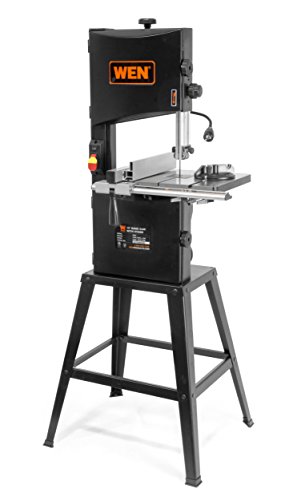

This guide is for hobby woodworkers setting up a first shop, small-space makers who need a benchtop machine that can still resaw, and DIYers moving up from a jigsaw to cleaner, repeatable cuts. Each saw below was chosen from the product name and specifications shown on its Amazon listing, so you can compare throat depth, cutting height, blade speed, and included accessories on the same terms the seller publishes.
Quick Picks
As an Amazon Associate we earn from qualifying purchases.
| Product | Best for | Key spec from title |
|---|---|---|
| WEN BA3962 10-Inch Two-Speed Band Saw with Stand | A first full-height setup in a small shop | 3.5-amp motor, two speeds, cuts up to 6 inches deep |
| RIKON 10-305 Bandsaw with Fence, 10-Inch | Steady benchtop cutting on a cast iron table | 1/3 HP motor, 9-5/8 inch throat, included rip fence |
| WEN 3966 Two-Speed Band Saw with Stand and Worklight, 14-Inch | Taller resawing and wider boards | 9.5-amp motor, cuts up to 8.85 inches deep |
How to Choose
Match resaw height and throat to your boards
Resaw height decides how thick a board you can slice into veneer or book-matched panels, and throat width decides how far from the edge you can cut a curve. Measure the widest and thickest stock you actually buy before comparing saws. A 6-inch cutting height covers most furniture parts, boxes, and cutting boards, while an 8-inch-plus height suits guitar blanks, thick turning blanks, and resawing wide planks. Throat width matters less for straight ripping and more for sweeping curves in chair parts or scroll-style work. Pick the smallest capacity that covers your real stock, because extra capacity usually means extra weight, footprint, and blade cost.
Check the motor and blade speed for your wood
A band saw motor is rated in amps or horsepower, and either number only tells part of the story. For softwoods and thin stock, a modest motor with a single speed is enough. For dense hardwoods such as maple, oak, or walnut, look for a stronger motor and a low blade speed, which keeps the blade cooler and reduces burning on thick cuts. Two-speed saws give you that choice: a slower speed for resawing hardwood and a faster speed for quick cuts in softwood or curves. If you plan to cut metal or plastic, confirm the listing states those materials, since a wood-only saw runs too fast for most metals.
Weigh benchtop size against a floor-standing saw
Benchtop saws sit on a workbench or a dedicated stand and suit garages, basements, and shared spaces where floor area is scarce. They are lighter to move, but their tables are smaller and their capacity is lower. A saw with an included stand turns a benchtop machine into a floor-standing one without a separate purchase, and it puts the table at a comfortable working height. Before ordering, check the assembled footprint and weight in the listing, then measure the spot in your shop, including clearance behind the saw for long boards and room to open the wheel covers for blade changes.
Treat safety gear and guards as part of the purchase
A band saw blade runs exposed at the cutting point, so the guard, the push stick, and your own protective gear belong in the buying decision, not as an afterthought. Look for an adjustable blade guard that lowers close to the workpiece, a paddle switch you can hit quickly, and a fence and miter gauge that keep hands away from the blade. Plan to wear safety glasses and hearing protection every time the saw runs, and keep a push stick within reach for narrow cuts so your fingers never pass near the blade. Read the manual’s guard and tension instructions before the first cut, and confirm replacement blades in the right length are easy to find.
The 3 Best Options
WEN BA3962 10-Inch Two-Speed Band Saw with Stand
The WEN BA3962 suits a woodworker who wants a ready-to-use floor setup without assembling a workstation from separate parts. Its stand lifts the table to a comfortable height, and the two-speed motor lets you slow down for hardwood resawing or speed up for softwood curves. The 6-inch cutting depth handles most furniture stock, while the included fence, miter gauge, work light, and dust port cover the accessories beginners usually buy separately. It is a practical first band saw for a garage or basement shop where bench space is already spoken for.
Specs
- 3.5-amp motor with two blade speeds of 1,520 or 2,620 FPM
- Cuts up to 6 inches deep and 9-3/4 inches wide
- Uses 72-inch blades from 1/8 to 1/2 inch wide
- Cast aluminum work table, 14-1/8 x 12-1/2 inches, bevels up to 45 degrees
- Includes a stand, work light, fence, miter gauge, and 3-in-1 dust port
- 2-year limited warranty
Best for: A hobbyist who wants a complete floor-standing setup in one box.
Watch out for: Confirm the 72-inch blade length before ordering spares, since this saw takes a different blade size than 14-inch models.
RIKON 10-305 Bandsaw with Fence, 10-Inch
The RIKON 10-305 fits a small shop that values a heavy, stable machine over extra capacity. Its cast iron table and solid steel frame resist vibration during long cuts, and the included rip fence tracks straight lines without drifting. The single blade speed keeps operation simple, and the micro-adjustable guide post raises and lowers with a turn of the handle. With a 4-5/8 inch cutting height it handles boxes, toys, pen blanks, and small furniture parts, and its longer warranty stands out among benchtop saws in this class.
Specs
- 1/3 HP, 3.5-amp induction motor with a blade speed of 2,780 FPM
- Cutting height of 4-5/8 inches and throat width of 9-5/8 inches
- Uses 70-1/2 inch blades from 1/8 to 1/2 inch wide
- Cast iron table, 13-3/4 x 12-1/2 inches, tilts up to 45 degrees
- Includes a removable rip fence, blade, and instruction manual
- 5-year warranty
Best for: A benchtop woodworker who wants a vibration-free cast iron table and a long warranty.
Watch out for: Check the assembled weight and footprint before buying, since the cast iron table makes this saw heavier than most benchtop models.
WEN 3966 Two-Speed Band Saw with Stand and Worklight, 14-Inch
The WEN 3966 is the pick for woodworkers whose projects outgrow a 10-inch saw. Its 14-inch wheels and taller frame open up an 8.85-inch cutting depth, so thick blanks and wide resawing jobs fit without a second machine. The 9.5-amp motor drives two blade speeds, and the large tilting table gives wide boards steady support. A blade tension gauge, circle cutting guide, flexible work light, and dust port come in the box, which keeps the setup useful for both straight ripping and curved work on larger pieces.
Specs
- 9.5-amp motor with two blade speeds of 1,480 or 3,280 FPM
- Cuts up to 8.85 inches deep and 13-3/8 inches wide
- Uses 100-3/4 inch blades from 1/8 to 1 inch wide
- Work table, 21-1/2 x 15-3/4 inches, bevels up to 45 degrees
- Includes a blade tension gauge, circle cutting guide, flexible work light, 3-in-1 dust port, fence, and miter gauge
- 2-year limited warranty
Best for: A woodworker resawing thick stock or cutting wide boards on a regular basis.
Watch out for: Measure your shop floor space first, since this saw is considerably heavier and taller than the 10-inch models in this guide.
Which One Fits Your Situation
Setting up a first small shop
Choose the WEN BA3962. The included stand means you do not need a spare bench, and the two speeds cover both hardwood resawing and quick softwood cuts. Its 6-inch depth handles the furniture parts, boxes, and cutting boards most beginners build, and the fence, light, and dust port arrive in the box. It is the simplest route from delivery to first cut.
Working on a bench in a shared space
Choose the RIKON 10-305. The cast iron table and steel frame stay steady during cuts, and the compact benchtop footprint fits a garage bench or a rolling cart. Its 5-year warranty adds confidence for a machine that will be moved and stored often. The 4-5/8 inch cutting height is enough for small parts, toys, and pen blanks.
Resawing thick boards and wide planks
Choose the WEN 3966. The 8.85-inch cutting depth and 13-3/8 inch width open up thick turning blanks, guitar bodies, and wide resawing that 10-inch saws cannot take. The stronger motor holds speed through dense hardwood, and the large table supports wide boards without tipping. Budget extra floor space and a second pair of hands for assembly.
Cutting curves and small detailed parts
Choose the RIKON 10-305 for fine work, or the WEN BA3962 if you also want the stand. Both take narrow 1/8 inch blades for tight curves, and their fences remove easily for freehand cutting. The RIKON’s steady table helps on delicate pieces, while the WEN’s low speed reduces burning when you slow down for detailed hardwood cuts.
Common Mistakes
- Buying for the biggest capacity on the page instead of the thickest board you actually cut, which wastes floor space and blade money.
- Ignoring blade length when ordering spares, so the new blade does not fit the wheels.
- Skipping the dust port connection, which leaves fine sawdust coating the wheels and guides.
- Running the blade guard high above the workpiece, which exposes more blade than the cut needs.
- Forgetting to check the table tilt and fence alignment before the first project, then blaming the blade for crooked cuts.
Frequently Asked Questions
What size band saw do I need for home woodworking?
A 10-inch saw with about 6 inches of cutting depth covers most home projects, including boxes, cutting boards, and small furniture parts. Move to a 14-inch saw when you regularly resaw boards thicker than 6 inches or cut wide curves in thick stock. Measure your thickest common board first, then match the saw’s cutting height to it with a little room to spare.
Can a band saw cut metal as well as wood?
Some band saws list metal among their cutting materials, but most woodworking saws run too fast for steel and will dull a wood blade quickly. A two-speed saw on its low setting can handle soft metals such as aluminum with the right blade, but check the Amazon listing for stated materials before assuming. For regular metal cutting, a saw built for metal is the safer choice.
How often should I change a band saw blade?
Change the blade when cuts start to wander, the saw feeds slowly, or the wood shows burn marks on straight cuts. A dull blade forces you to push harder, which is when kickback and wandering happen. Keep at least one spare in the correct length and width for your model, and match the tooth count to the thickness you cut most often.
Do I need a stand for a benchtop band saw?
A stand is not required if you have a sturdy bench at a comfortable height, but it helps in small shops where bench space is limited. The WEN models in this guide include a stand, while the RIKON 10-305 is a benchtop unit that can sit on a bench or an optional stand. Whichever route you take, bolt or clamp the saw down so it cannot shift during a cut.