Our Short List of 3

- Type: Full synthetic
- Grade: SAE 5W-30
- Format: 5-quart bottle

- Type: Full synthetic, made from natural gas using a gas-to-liquid process, per Pennzoil
- Grade: SAE 5W-30
- Format: 5-quart bottle, manufacturer part 550046126 in the listing

- Type: Full synthetic
- Grade: SAE 5W-30
- Format: 5-quart bottle, model 787007 in the listing
All 5 Picks at a Glance
| Product | Specs | Action |
|---|---|---|
| 1. Mobil 1 Extended Performance Full Synthetic 5W-30, 5 Quart — Best for Long Published Drain Positioning |
| Check price on Amazon |
| 2. Pennzoil Platinum Full Synthetic 5W-30, 5 Quart — Best Gas-to-Liquid Formulation |
| Check price on Amazon |
| 3. Valvoline Advanced Full Synthetic SAE 5W-30, 5 Quart — Best Documented All-Rounder |
| Check price on Amazon |
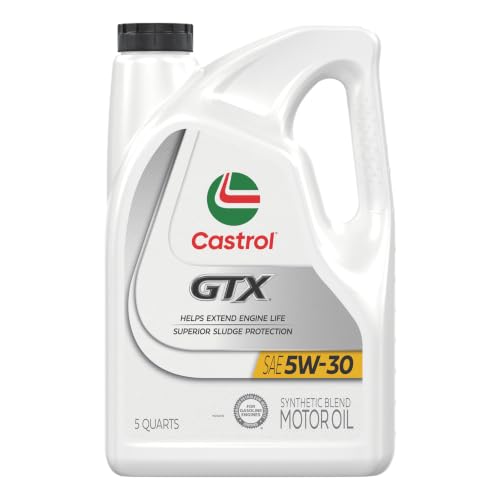 4. Castrol GTX 5W-30 Synthetic Blend, 5 Quarts — Best Blend for Standard Intervals |
| Check price on Amazon |
 5. Castrol GTX High Mileage 5W-30 Synthetic Blend, 5 Quarts — Best for Engines Over 75,000 Miles |
| Check price on Amazon |
Key takeaways
- Compare the best automotive engine oil by viscosity grade, oil type and API and ILSAC specification, with full synthetic and synthetic blend picks in 5W-30.
As an Amazon Associate we earn from qualifying purchases.
There is no single best automotive engine oil, and any guide that names one without asking about your engine is skipping the only steps that matter. The right oil is the one that matches three things printed in your owner’s manual: the viscosity grade, the performance specification, and the approval list for your engine. Get those three right and several reputable oils will serve the engine well. Get the viscosity or the specification wrong and even a premium oil is the wrong oil.
This guide therefore works in two parts. First, it explains how to read viscosity grades and the API and ILSAC specifications that define a modern gasoline engine oil, and how conventional, synthetic blend and full synthetic oils differ. Second, it compares well-documented oils that share the most commonly specified grade, 5W-30, so the differences you see are differences in formulation type and manufacturer positioning rather than in grade. Every claim below is drawn from the manufacturers’ own product listings and data sheets; we have not tested these oils, and no oil here is credited with performance beyond what its maker publishes.
Affiliate disclosure: This article contains affiliate links. If you buy through a link on this page, we may earn a commission at no additional cost to you. Specifications are taken from the manufacturers’ listings and data sheets, and formulations and approvals change over time, so confirm the viscosity grade, specification and ASIN on the product page and in your owner’s manual before ordering.
Read the Manual First: Viscosity and Specifications
What 5W-30 actually means
The grade is defined by the SAE J300 standard. The first number, followed by W for winter, describes cold-cranking and pumping behaviour at low temperature: a 5W oil is tested at colder temperatures than a 10W oil, which is why northern vehicles often specify 0W or 5W grades. The second number describes the oil’s kinematic viscosity at operating temperature. A 30-grade oil must fall inside a defined viscosity window at 100 degrees Celsius. Neither number is a quality score. A 0W-20 is not better than a 5W-30; it is simply the thinner oil that a particular engine was designed around, and using a thicker grade than specified can affect variable valve timing systems and fuel economy, while a thinner grade than specified can reduce the oil film the bearings were designed for.
API and ILSAC: the specifications that matter
For gasoline engines, look for the current API service category on the bottle — API SP and the newer API SQ — and for the ILSAC GF-6A or GF-7A standard where the manual calls for it. These specifications are not marketing labels. They include limits and engine tests covering wear, deposits, sludge, oxidation, fuel economy and, since API SN Plus, protection against low-speed pre-ignition in turbocharged direct-injection engines. An oil that meets API SP or SQ and ILSAC GF-6A or GF-7A in the correct grade satisfies the baseline requirement of most modern gasoline cars. Some manufacturers add their own approvals on top — dexos licences for General Motors engines and maker-specific standards from Ford, Chrysler and European brands — and where your manual names one, the oil must carry it.
Conventional, synthetic blend and full synthetic
Conventional oil is refined mineral base oil with an additive package. Synthetic blend mixes mineral and synthetic base stocks. Full synthetic oil uses predominantly synthetic base stocks, which generally give better oxidation resistance, better low-temperature flow and more stable viscosity over a long drain interval. The honest way to state the difference is narrow: a full synthetic that meets the same API and ILSAC specification as a blend offers more margin at temperature extremes and over extended intervals, as its maker documents. It does not follow that a blend meeting the specified standard is inadequate for a normal interval, and no listing specification supports promising a specific gain in engine life from switching types. Follow the interval in the manual for the oil type it specifies, and shorten it for severe service such as short trips, towing or dusty conditions when the manual says to.
The Picks: 5W-30 Oils Compared
1. Mobil 1 Extended Performance Full Synthetic 5W-30, 5 Quart — Best for Long Published Drain Positioning
- Type: Full synthetic
- Grade: SAE 5W-30
- Format: 5-quart bottle
Mobil 1 Extended Performance is the long-interval flagship of the Mobil 1 range, and its listing presents it as a full synthetic 5W-30 in the 5-quart format most home oil changes need. It suits owners whose manual specifies a full synthetic 5W-30 meeting current API and ILSAC standards and who want the manufacturer’s extended-performance formulation rather than the standard Mobil 1 line. Read the bottle’s stated protection period carefully and treat it as a ceiling, not a target: the vehicle maker’s interval and the oil life monitoring system, where fitted, still govern, and severe service shortens any interval. Confirm the current specification list on the product page, because approvals are revised as standards move from GF-6A to GF-7A and from API SP to SQ.
2. Pennzoil Platinum Full Synthetic 5W-30, 5 Quart — Best Gas-to-Liquid Formulation
- Type: Full synthetic, made from natural gas using a gas-to-liquid process, per Pennzoil
- Grade: SAE 5W-30
- Format: 5-quart bottle, manufacturer part 550046126 in the listing
Pennzoil distinguishes Platinum by its base oil: the listing states it is made with natural gas through a gas-to-liquid process rather than from crude oil alone. Pennzoil’s published description claims cleaner pistons based on Sequence IIIH results, wear protection based on the Sequence IVA test using SAE 5W-30, and a protection guarantee of up to 15,000 miles or one year, whichever comes first, under the terms of its lubrication limited warranty. Those are the manufacturer’s own test-based claims and warranty terms, quoted here as published, not results we can reproduce. For a buyer, the practical reading is simpler: this is a full synthetic 5W-30 from a major maker, documented against industry test sequences, in the convenient 5-quart size. Check the listing for the current API and ILSAC statements before relying on it for a specific approval such as a dexos licence.
3. Valvoline Advanced Full Synthetic SAE 5W-30, 5 Quart — Best Documented All-Rounder
- Type: Full synthetic
- Grade: SAE 5W-30
- Format: 5-quart bottle, model 787007 in the listing
Valvoline Advanced is the company’s mainstream full synthetic, and the listing documentation is unusually complete, with viscosity, SAE J300 grade and part numbers all stated. Valvoline positions the Advanced line around wear, deposit and heat protection for everyday and demanding driving, and the 5W-30 grade covers a large share of gasoline cars and light trucks whose manuals specify it. Owners of newer Valvoline shoppers should also know the range now includes a separate Restore and Protect line; that is a different product with its own listing and ASIN, so do not treat the two as interchangeable when ordering. As with every pick here, verify that the bottle’s API category and ILSAC standard match the manual for your model year, since a name that stays the same can hide a formulation that has been updated.
4. Castrol GTX 5W-30 Synthetic Blend, 5 Quarts — Best Blend for Standard Intervals
- Type: Synthetic blend, listed as GTX Ultraclean in the product details
- Grade: SAE 5W-30
- Format: 5-quart bottle
Castrol GTX is the clearest illustration of why type labels need care: a name long associated with conventional oil now covers a synthetic blend in this listing, so judge the bottle in front of you, not the badge’s history. Castrol’s own product data for GTX 5W-30 states it is suitable for automotive gasoline engines where the manufacturer recommends an API SQ, ILSAC GF-7 or earlier specification 5W-30 lubricant, which is exactly the wording a buyer should look for. As a blend, it is the sensible pick for an engine whose manual allows a blend at a normal drain interval, for older vehicles out of warranty that specify 5W-30, and for owners who change oil on a conservative schedule and do not need the extended-interval margin of a full synthetic. It is not the pick for an engine whose manual requires a full synthetic or a specific manufacturer approval the blend does not carry.
5. Castrol GTX High Mileage 5W-30 Synthetic Blend, 5 Quarts — Best for Engines Over 75,000 Miles
- Type: Synthetic blend, high mileage formulation
- Grade: SAE 5W-30
- Format: 5-quart bottle
High mileage oils are blends or full synthetics formulated for engines with more than 75,000 miles, typically with seal conditioning additives and a stronger detergent package, as the manufacturer describes them. Castrol states that GTX High Mileage 5W-30 is specially formulated for vehicles over 75,000 miles and describes protection across areas including sludge control, corrosion prevention and friction and timing wear. Treat those as the maker’s stated design aims. What a high mileage oil cannot do is repair a worn seal or a mechanical leak, so an engine that leaves oil on the driveway needs diagnosis, not a different bottle. Choose this pick when an older 5W-30 engine shows early seepage at seals or rising consumption and the manual’s specification is still met; choose the standard GTX blend above when it does not.
How to Buy Without Getting It Wrong
Work through four checks in order. First, find the exact grade in the manual, including any alternative grade allowed for your climate. Second, copy the required specification and approvals exactly — API category, ILSAC standard, and any maker approval or licence. Third, choose the oil type the manual requires; where it permits more than one type, decide by interval and use, not by advertising. Fourth, match the listing: grade on the front, specification on the back, bottle size that covers your sump capacity plus the filter, and a single unmixed product rather than topping up with a different grade.
Storage and handling deserve a brief note as well. Keep unopened bottles indoors, out of direct sun and away from freezing garages where possible, and use the oldest bottle first so stock rotates. Once a bottle is opened, reseal it tightly and use the remainder within a reasonable period rather than saving a part-used bottle indefinitely for top-ups, because an open container can collect dust and moisture. When topping up between changes, add small amounts, recheck the dipstick on level ground after the oil has settled, and never fill above the upper mark: an overfilled sump can foam the oil and stress seals, which is the opposite of the protection the oil was bought to provide. Record the date, mileage, grade and product used at every change in the service book or a simple note; that record is what lets you spot rising consumption early and prove correct maintenance later.
Two final cautions. Diesel engines, motorcycles and most European models with maker-specific approvals follow different specification systems, and nothing in this 5W-30 gasoline roundup should be read as covering them. And always dispose of used oil through a collection point; most sellers of motor oil accept used oil for recycling.
Final Verdict
For a documented full synthetic 5W-30, Mobil 1 Extended Performance, Pennzoil Platinum and Valvoline Advanced are three defensible choices separated mainly by each maker’s published positioning — extended performance, gas-to-liquid base oil and all-round documentation respectively. For a standard interval in an engine that allows a blend, Castrol GTX is the straightforward pick, and its high mileage version is the one aimed at engines past 75,000 miles. In every case the manual’s grade and specification decide first; brand comes second, and that order is what keeps an oil change simple and correct.