Key takeaways
- Compare the best waterproof mattress protectors for spills, allergens and quiet sleep, with fitted and zippered picks checked for depth, fabric and care.
- Top Pick: SafeRest Premium Waterproof Mattress Protector
- Runner-up: SureGuard Mattress Protector, Fitted Cotton Terry
- Also consider: PlushDeluxe Premium Bamboo Mattress Protector
The best waterproof mattress protector is a fitted cotton terry cover from SafeRest or SureGuard: both block spills, sweat and nighttime accidents under a soft, quiet surface that does not change the feel of the bed. If you sleep warm, a bamboo viscose cover runs cooler, and if allergens or bed bugs are the concern, a zippered encasement seals the mattress on all six sides.
A protector is cheap insurance for an expensive mattress. Most mattress warranties are voided by stains, so one glass of water, one pet accident or one toddler leak can cost far more than the cover itself. The five picks below cover the main buying paths: everyday fitted protection, a cooler bamboo surface, and full encasements for allergy and pest control.
As an Amazon Associate, we earn from qualifying purchases.
Quick Answer
For most beds, a fitted cotton terry protector such as the SafeRest Premium or SureGuard blocks spills and sweat without changing how the mattress feels. Choose a bamboo surface if you sleep warm, and pick a zippered encasement from Linenspa or SureGuard when you need full six-sided coverage against allergens and bed bugs.
Table of Contents
- SafeRest Premium Waterproof Mattress Protector
- SureGuard Mattress Protector, Fitted Cotton Terry
- PlushDeluxe Premium Bamboo Mattress Protector
- Linenspa Zippered Mattress Encasement
- SureGuard Mattress Encasement, Zippered Six-Sided
- How to Choose
- Who Should Skip
- FAQ
- Final Verdict
- Product and ASIN Reference
SafeRest Premium Waterproof Mattress Protector

SafeRest is the default recommendation in this category, and the Premium fitted protector earns that spot with a simple formula: a cotton terry sleep surface over a waterproof membrane, in a fitted sheet style that goes on and comes off like normal bedding. The maker rates it against fluids, urine and perspiration, which covers the three most common ways mattresses get stained.
The terry surface is the reason it sleeps quietly. Instead of a plastic-feeling sheet, you get a soft, slightly textured cotton top that wicks small amounts of moisture and stays silent when you roll over. The stretchable pockets grip the corners of deep mattresses, so the cover stays put under a fitted sheet without bunching.
This is the mid-range pick for most households: kids, pets, guest rooms and anyone who wants stain protection that can be stripped off and machine washed in minutes rather than wrestled off a zipper.
Specs
- Size referenced: Queen, 60 x 80 inches
- Surface: cotton terry
- Style: fitted sheet with stretchable pockets
- Barrier: waterproof membrane rated for fluids, urine and perspiration
- Care: machine washable
- Tier: mid-range
SureGuard Mattress Protector, Fitted Cotton Terry

SureGuard takes the same fitted cotton terry concept and leans harder into allergy control and material safety. The top is 100 percent cotton terry, and the protector is made without vinyl, PVC, phthalates or fire retardants, which matters if you are buying for a child’s bed or a household that avoids those materials.
Beyond liquids, SureGuard positions this cover as a hypoallergenic barrier that blocks dust mites, allergens, bacteria, mildew and mold from settling into the mattress. That makes it a strong pick for allergy-prone sleepers who do not need a full encasement but want more than spill protection alone.
Fit and care are straightforward: it pulls on like a fitted sheet and is machine washable and dryable, so it can rotate with your normal sheet changes. It sits in the premium tier, justified by the cotton terry surface, the chemical-free construction and the brand’s long quality guarantee on its protector line.
Specs
- Size referenced: Queen, 60 x 80 inches
- Surface: 100 percent cotton terry
- Style: fitted sheet
- Barrier: waterproof, hypoallergenic; blocks dust mites, allergens, bacteria, mildew and mold
- Materials note: free from vinyl, PVC, phthalates and fire retardants
- Care: machine wash and dry
- Tier: premium
PlushDeluxe Premium Bamboo Mattress Protector

If waterproof covers have always felt too warm or too plasticky, the PlushDeluxe is the alternative to look at. Its top layer is bamboo viscose, a smooth, breathable fabric that feels cooler against the skin than terry and stays quiet through the night. Underneath sits a polyurethane laminate lining that does the waterproof work.
Bamboo viscose is also naturally moisture-wicking, so light sweat is pulled away from the surface instead of pooling, which warm sleepers notice most in summer. The fitted skirt stretches over deep mattresses, and the whole cover is machine washable, so it behaves like ordinary bedding despite the technical lining.
Choose this one if temperature and surface feel are your priorities and you want mid-range protection for spills, sweat and everyday accidents rather than a sealed encasement.
Specs
- Size referenced: Queen, 60 x 80 inches
- Surface: bamboo viscose
- Lining: polyurethane laminate waterproof barrier
- Style: fitted sheet with stretch skirt
- Features: breathable, noiseless, hypoallergenic per maker
- Care: machine washable
- Tier: mid-range
Linenspa Zippered Mattress Encasement
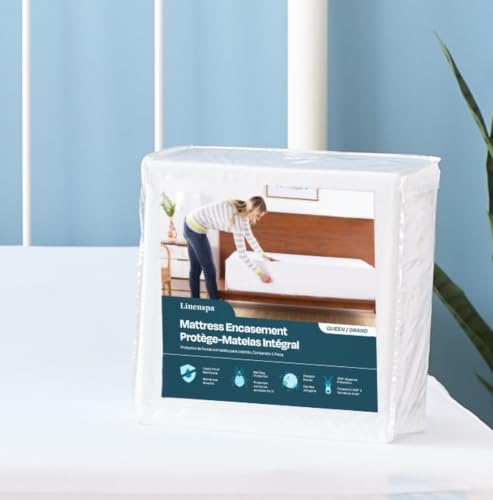
An encasement is a different tool from a fitted protector: it wraps the entire mattress, top, bottom and sides, and closes with a zipper. The Linenspa version is the budget way to get that six-sided coverage. The surface is soft brushed polyester with a polyurethane backing, and at about a pound in the queen size it adds almost no bulk or noise.
Because the mattress is fully sealed inside, an encasement is the right answer for dust mite allergies, dorm rooms, rental properties and secondhand mattresses you want to isolate before use. The queen size fits mattresses up to 12 inches deep, which suits most dorm and guest-bed mattresses but is too shallow for tall pillow-top beds, so measure before you buy.
The tradeoff is convenience. Putting an encasement on is a two-person job, and you will not remove it for weekly washing the way you would a fitted cover. Most owners pair it with a cheap fitted protector on top and wash only the top layer.
Specs
- Size referenced: Queen, 80 x 60 x 12 inches
- Surface: soft brushed polyester, 100 percent polyester
- Backing: 100 percent polyurethane
- Closure: zipper, full six-sided encasement
- Model: Ls1pqqep
- Weight: about 1 pound
- Care: machine wash
- Tier: budget
SureGuard Mattress Encasement, Zippered Six-Sided
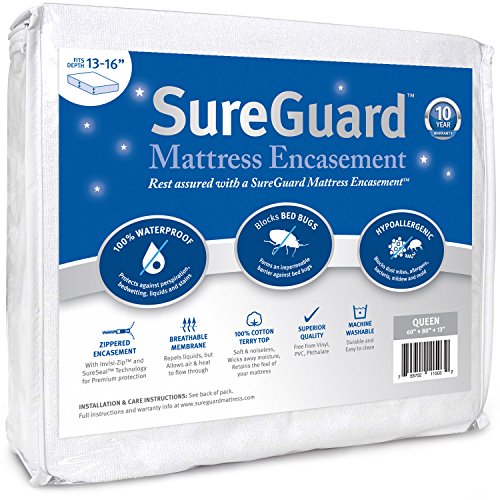
The SureGuard encasement is the premium version of the sealed approach, built for mattresses 13 to 16 inches deep. It uses a cotton terry top rather than plain polyester, so the sleep surface feels more like bedding, and its fine zipper uses the brand’s Invisi-Zip and SureSeal design to close the entry point that bed bugs and allergens would otherwise use.
SureGuard rates the encasement as waterproof on all six sides and bed bug proof, with the same hypoallergenic barrier against dust mites, allergens, bacteria, mildew and mold as its fitted protector. It is also made without vinyl, PVC, phthalates or fire retardants, and it carries a 10-year quality guarantee, the longest backing in this roundup.
Pick it if you are protecting a thick, expensive mattress for the long term, managing a serious dust mite allergy, or treating a bed bug problem where the seal quality genuinely matters. For frequent accidents, the maker suggests layering a fitted protector over the encasement so the washable layer takes the mess.
Specs
- Size referenced: Queen, 60 x 80 inches, fits 13 to 16 inches deep
- Surface: cotton terry top
- Closure: zipper with Invisi-Zip and SureSeal technology
- Barrier: six-sided waterproof, bed bug proof, hypoallergenic
- Materials note: free from vinyl, PVC, phthalates and fire retardants
- Guarantee: 10-year quality guarantee
- Care: machine wash and dry
- Tier: premium
How to Choose
Start with the closure style. A fitted protector covers the top and sides, goes on in a minute and comes off for every wash, which is what most people need for spills and sweat. An encasement seals all six sides and is the better choice for dust mite allergies, bed bugs or isolating a used mattress, at the cost of a harder install.
Measure your mattress depth before ordering anything. Fitted protectors with stretch pockets handle most modern beds, but encasements have hard limits: the Linenspa above fits up to 12 inches, while the deep SureGuard encasement covers 13 to 16 inches. A cover that is too shallow will strain the zipper or tear at the corners.
Then pick a surface. Cotton terry is soft, quiet and slightly absorbent, and it is the safest all-round choice. Bamboo viscose feels smoother and cooler for warm sleepers. Smooth polyester encasements are the most utilitarian and the easiest to wipe down. Finally, check the care label and the material list: machine washable and dryable covers get washed more often, and vinyl-free construction avoids the crinkle and odor some sleepers dislike.
Who Should Skip
Skip a basic fitted protector if bed bugs are your actual problem; only a zippered encasement with a sealed closure gives full protection, and even then the box spring usually needs its own encasement. Skip encasements if you wash your protector weekly, because removing and refitting one is slow, two-person work; layer a fitted cover over it instead.
Skip waterproof protectors entirely if your mattress maker requires a specific cover to keep a trial or warranty valid, and check those terms first. And if your real issue is comfort, heat buildup or a worn sleep surface, a protector will not fix it; that is a mattress topper problem, not a protection problem.
FAQ
Do waterproof mattress protectors sleep hot?
Some do, but surface fabric matters more than the waterproof layer itself. Cotton terry and bamboo viscose covers breathe reasonably well and feel close to a normal sheet, while smooth vinyl-style covers trap the most heat. If you sleep warm, choose the bamboo pick and avoid pairing it with plastic-feel sheets.
How often should you wash a mattress protector?
Every one to two months for a fitted protector under normal use, and immediately after any spill or accident. Wash in cool or warm water and dry on low heat, since high heat can damage the waterproof membrane over time. Encasements are usually washed only a few times a year.
Will a protector void a mattress warranty?
It is usually the opposite. Most mattress warranties exclude stained mattresses, so a waterproof protector helps keep the warranty valid by preventing stains in the first place. Check your mattress brand’s terms if it sells or requires a specific protector model.
What is the difference between a protector and an encasement?
A protector is a fitted cover for the top and sides of the mattress, designed for liquids and easy washing. An encasement wraps all six sides and zips shut, adding sealed protection against dust mites and bed bugs. Many allergy-focused households use an encasement underneath and a washable protector on top.
Final Verdict
For most beds, buy the SafeRest Premium: it is quiet, washable and proven protection in the mid-range tier. Allergy sufferers who want the same easy fitted style should step up to the SureGuard fitted protector, and warm sleepers should choose the PlushDeluxe bamboo cover. When the problem is dust mites or bed bugs rather than spills, seal the mattress instead: the Linenspa encasement on a budget, or the deep, guaranteed SureGuard encasement for thick mattresses.